Firstly, thanks to Penguin Teen Australia for this review copy <3
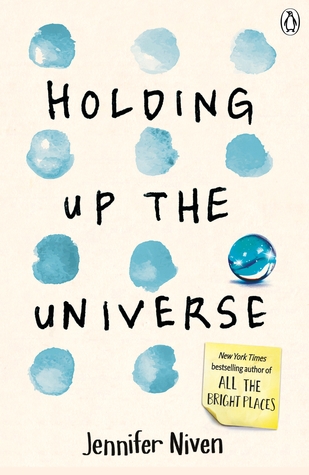
Date Read: October 29 - 31 2016
Date Released: October 4 2016
Publisher: Penguin Australia
Source: Review copy via publisher
Genre: Contemporary
My Rating:
Synopsis:
Date Released: October 4 2016
Publisher: Penguin Australia
Source: Review copy via publisher
Genre: Contemporary
My Rating:
Synopsis:
"Everyone thinks they know Libby Strout, the girl once dubbed 'America's Fattest Teen'. But no one's taken the time to look past her weight to get to see who she really is. Since her mum's death, she's been picking up the pieces in the privacy of her home, dealing with her heartbroken father and her own grief. Now, Libby's ready: for high school, for new friends, for love, and for EVERY POSSIBILITY LIFE HAS TO OFFER. I know the part I want to play here at MVB High. I want to be the girl who can do anything.
Everyone thinks they know Jack Masselin too. Yes, he's got swagger, but he's also mastered the art of fitting in. What no one knows is that Jack has a secret: he can't recognize faces. Even his own brothers are strangers to him. He's the guy who can re-engineer and rebuild anything, but he can't understand what's going on with the inner workings of his own brain. So he tells himself to play it cool: Be charming. Be hilarious. Don't get too close to anyone.
Until he meets Libby. When the two get tangled up in a cruel high school game which lands them in group counseling, Libby and Jack are both angry, and then surprised. Because the more time they spend together, the less alone they feel. Because sometimes when you meet someone, it changes the world - theirs and yours."
Everyone thinks they know Jack Masselin too. Yes, he's got swagger, but he's also mastered the art of fitting in. What no one knows is that Jack has a secret: he can't recognize faces. Even his own brothers are strangers to him. He's the guy who can re-engineer and rebuild anything, but he can't understand what's going on with the inner workings of his own brain. So he tells himself to play it cool: Be charming. Be hilarious. Don't get too close to anyone.
Until he meets Libby. When the two get tangled up in a cruel high school game which lands them in group counseling, Libby and Jack are both angry, and then surprised. Because the more time they spend together, the less alone they feel. Because sometimes when you meet someone, it changes the world - theirs and yours."
---
Jennifer Niven has such a knack for writing engaging contemporaries. All the Bright Places is one of the most memorable books I’ve ever read - it’s so impactful and really stuck with me. Niven’s HUtU also struck a chord in me.
I really loved Libby’s character. Previously known as “American’s fattest teen” she returns to high school in a much better mental and physical state than she was previously in. I really admired Libby’s strength - she tries not to let people get to her and puts on a good front. Like any human being, some of the hurtful comments get through and affect her but she retaliates with brave acts to promote body image. I loved how opinionated she was and she wasn’t afraid to voice those opinions. She’s smart, resilient and overall just a character I really enjoyed reading.
I’m not sure how I feel about Jack. I thought it was interesting how his prosopagnosia was portrayed. I didn’t always feel like he didn’t recognise the person, but as someone who has no idea how the condition works I can’t vouch for the accuracy of its portrayal. His character lacked a bit of dimension in my opinion. While he was always trying to please people or giving off a eat-shit-I-don’t-care attitude - which is understandable given his need to cover up his inability to recognise people - he came off as not really having an opinion or unwilling to defend his beliefs. To me that’s a weakness of character which meant I didn’t warm to Jack as much as I would have liked to.
The plot was kind of a typical contemporary where our two characters navigate their way through high school with challenges from each other and those around them. There’s cute dancing, family troubles, high school bullying (why do people need to be so horrible to others just so they can make themselves feel better? Ugh) and of course romance.
The romance was cute but I do not believe love is a cure for diseases. Love is a wonderful thing, it can make people happy, it can chemically release hormones to make one feel things. But I don’t think it’s a cure. And that’s where Holding Up the Universe fell flat for me. High school love was used as a cure and it made what could have been a lovely book about appreciating one’s self, into a story I scoffed at.
That’s not to say I didn’t enjoy the book. Niven is a skilled writer; her style is engaging and I flew through the past-faced story. I liked the diversity and Libby’s strength in standing up to horrible people who have nothing better to do than pick on others to make themselves feel better.
I think books like this drive home how society degrades women and we can never just BE. We’re either too fat or too skinny or too tall or too short or too something (I think Niven mentions this through Libby in the book, I can’t remember). Believe it or not, I was bullied in high school for being too skinny. I was constantly being asked if I was bulimic or anorexic or just blatantly called “ano”. I’d have my mum write notes to excuse me from swimming carnivals because of the horrible stares and comments I’d get whenever I wore a swimming costume. Anyway, this isn’t about me looking for pity/sympathy. It’s my way of telling you that you’re perfect the way you are and screw society. I’ve learnt to accept myself.
Despite the books use of romance to make everything seem better (which it doesn’t), Holding Up the Universe is an important read reminding ourselves that no matter what society says, you are wanted and loved. You be you.
Jennifer Niven has such a knack for writing engaging contemporaries. All the Bright Places is one of the most memorable books I’ve ever read - it’s so impactful and really stuck with me. Niven’s HUtU also struck a chord in me.
I really loved Libby’s character. Previously known as “American’s fattest teen” she returns to high school in a much better mental and physical state than she was previously in. I really admired Libby’s strength - she tries not to let people get to her and puts on a good front. Like any human being, some of the hurtful comments get through and affect her but she retaliates with brave acts to promote body image. I loved how opinionated she was and she wasn’t afraid to voice those opinions. She’s smart, resilient and overall just a character I really enjoyed reading.
I’m not sure how I feel about Jack. I thought it was interesting how his prosopagnosia was portrayed. I didn’t always feel like he didn’t recognise the person, but as someone who has no idea how the condition works I can’t vouch for the accuracy of its portrayal. His character lacked a bit of dimension in my opinion. While he was always trying to please people or giving off a eat-shit-I-don’t-care attitude - which is understandable given his need to cover up his inability to recognise people - he came off as not really having an opinion or unwilling to defend his beliefs. To me that’s a weakness of character which meant I didn’t warm to Jack as much as I would have liked to.
The plot was kind of a typical contemporary where our two characters navigate their way through high school with challenges from each other and those around them. There’s cute dancing, family troubles, high school bullying (why do people need to be so horrible to others just so they can make themselves feel better? Ugh) and of course romance.
The romance was cute but I do not believe love is a cure for diseases. Love is a wonderful thing, it can make people happy, it can chemically release hormones to make one feel things. But I don’t think it’s a cure. And that’s where Holding Up the Universe fell flat for me. High school love was used as a cure and it made what could have been a lovely book about appreciating one’s self, into a story I scoffed at.
That’s not to say I didn’t enjoy the book. Niven is a skilled writer; her style is engaging and I flew through the past-faced story. I liked the diversity and Libby’s strength in standing up to horrible people who have nothing better to do than pick on others to make themselves feel better.
I think books like this drive home how society degrades women and we can never just BE. We’re either too fat or too skinny or too tall or too short or too something (I think Niven mentions this through Libby in the book, I can’t remember). Believe it or not, I was bullied in high school for being too skinny. I was constantly being asked if I was bulimic or anorexic or just blatantly called “ano”. I’d have my mum write notes to excuse me from swimming carnivals because of the horrible stares and comments I’d get whenever I wore a swimming costume. Anyway, this isn’t about me looking for pity/sympathy. It’s my way of telling you that you’re perfect the way you are and screw society. I’ve learnt to accept myself.
Despite the books use of romance to make everything seem better (which it doesn’t), Holding Up the Universe is an important read reminding ourselves that no matter what society says, you are wanted and loved. You be you.